

PROGRESSIVE OVERLOAD EXPLAINED FOR NATURAL LIFTERS
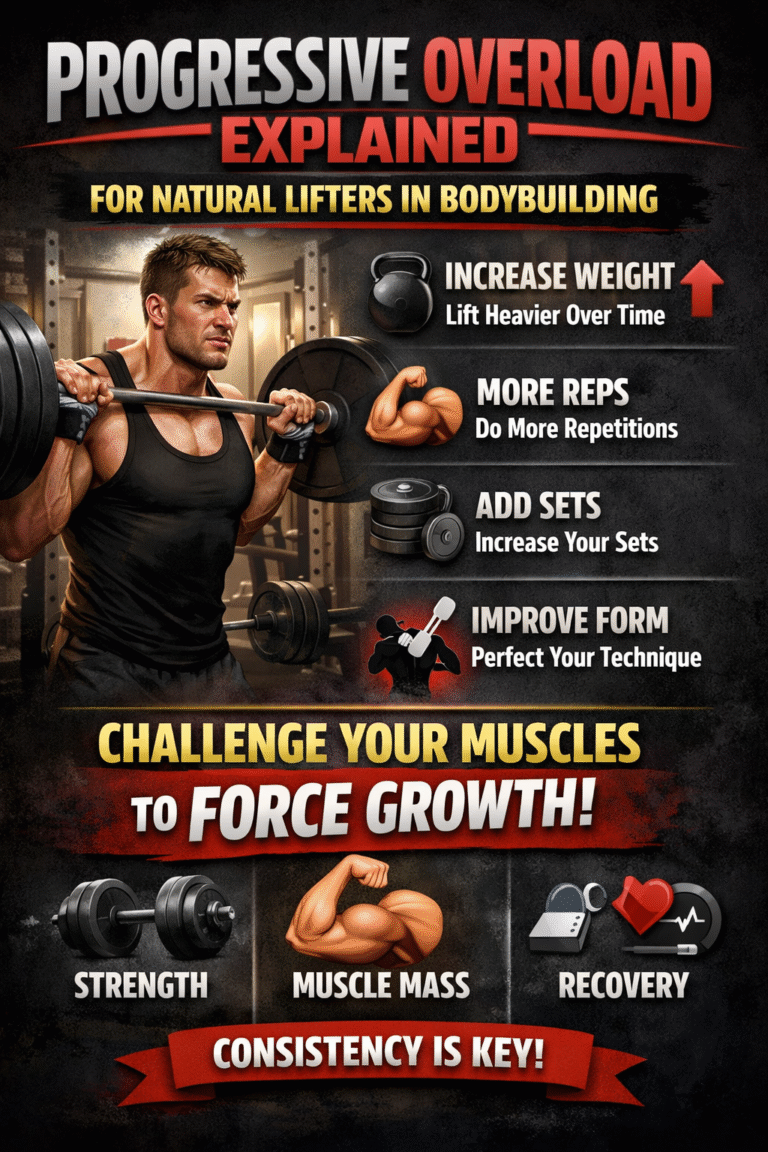
Progressive overload means gradually increasing the stress you place on your muscles overtime so they are forced to adapt and grow. if you keep lifting the same weight for the same reps for every week , your body has no reasons to change. For natural lifters(no steriods), progressive overload is everything. since you don’t have artificial recovery enhancement, you must train smart , not just hard. Progressive overload is the foundational principle of muscle growth and and strength development , especially for natural lifters, and it simply means that overtime you must gradually increase the stress placed on your muscles in order to force them to adapt. The human body is highly efficient and always seeks to conserve energy, so if you repeatedly lift the same weight for the same number of reps with the same level of effort, your body will quickly adapt and stop changing because it no longer sees a reason to grow. When you train with resistance, you create mechanical tension in the muscle fibers, cause small amounts of muscle damage, and generate metabolic stress; in response, your body repairs those fibers and reinforces them so they can handle similar stress more easily in the future. However, for this repair process to result in noticeable increases in muscle size and strength, the stimulus must gradually increase over time, which can be done not only by adding more weight but also by performing more repetitions with the same weight, increasing the number of sets, improving exercise technique and range of motion, slowing down the eccentric (lowering) phase to increase time under tension, reducing rest periods to increase training density, or training slightly closer to muscular failure in a controlled way.
7 WAYS TO APPLY PROGRESSIVE OVERLOAD
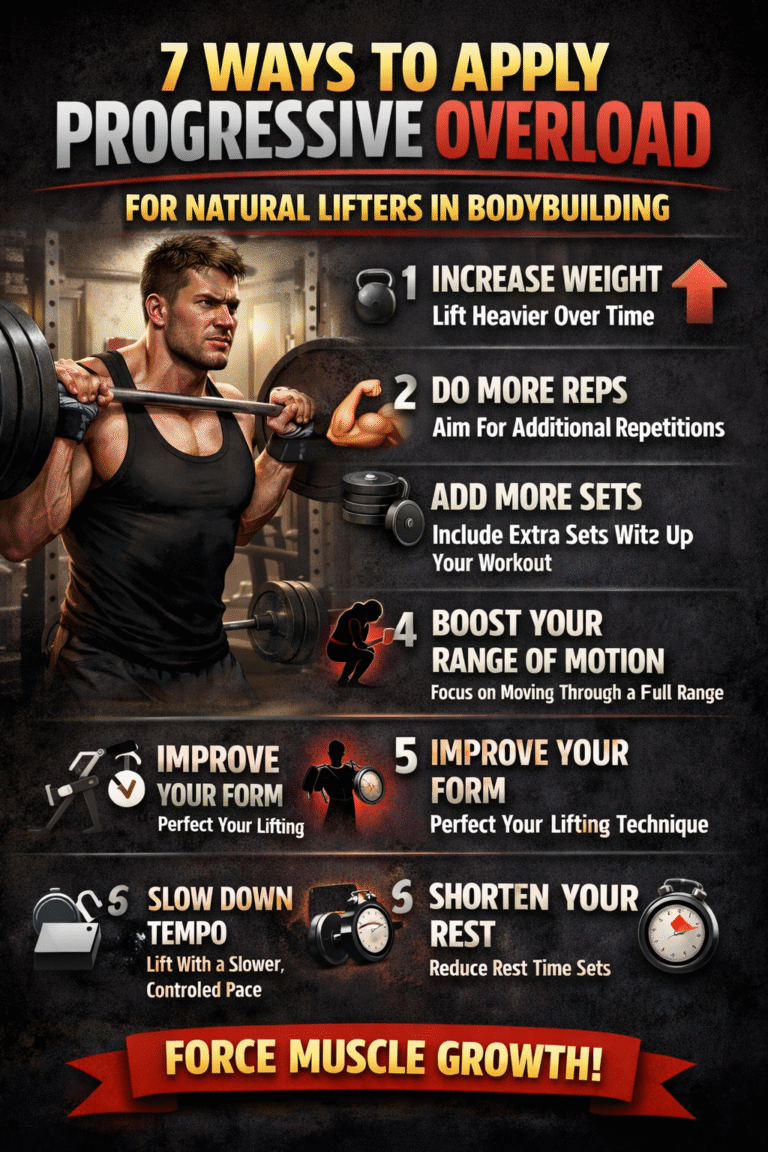
INCREASE YOUR WEIGHT
Increasing your weight you lift overcome is the most direct and traditional form of progressive overload, and it works by gradually exposing your muscles to greater mechanical tension, which is the primary driver of strength and hypertrophy. when you add even a small amoutn of weight such as: 1.25 kg – 2.5kg per side of compound lifts. you are forcing your muscles fibres, nervous system, connective tissues to adapt to a higher demand than they previously handled. this increased demand stimulates more motor unit recruitmen, meaning your body leans to activate more muscles fibres efficiently, which not only increases strength but also contributes to a long term muscle growth. However, for natural lifters increasing weight must be done strategically and patiently: adding too much too quickly can compromise form, increasing injury risk and overload recovery capacity. The goal is to make dramatic jumps but to make small, sustainable increases while maintaining proper technique and control. For example, if you can perform 60 kg for 10 controlled reps with good form, and over the next few weeks that same weight begins to feel easier, increasing it to 62.5 kg while staying within your target rep range ensures that your body continues adapting. This gradual load progression, when applied consistently across weeks and months, creates a powerful compounding effect, where small improvements accumulate into significant strength and size gains over time.
DO MORE REPS
Doing more repititions with the same weight is one of the safest and most effective ways to apply progressive overload, especially for natural lifters who need to manage recovery carefully. instead of immediately increasing the weight on the bar, you focus on increasing the number of reps you can perform while maintaining proper form and control.when you perform more reps with the same loan, you increase the total work your muscles are doing, which raises mechanical tension and metablic stress. both are important factors for muscle growth. over time, this signals your body to adapt by becoming stronger and more resistent to fetigue. For ex- if you lift 60 kg for 8 reps this week, over the next few sessions you push that to 9, then 10 then 11 reps without sacrifising form, your muscles are clearly stronger even though the weight has not changed. Once you reach the top of your target rep range—such as 12 reps in an 8–12 range—you can then increase the weight and start the cycle again at the lower end of the range. This method, often called double progression, allows for steady improvement without placing excessive stress on joints and connective tissues. It is particularly valuable for natural lifters because it builds strength gradually, reduces the risk of ego lifting, and ensures that progression is based on real performance improvement rather than rushing to add heavier weights before the body is ready.
ADD MORE SETS
Adding more sets is another powerful way to apply progressive overload because it increases your total training volume, which is one of the key driver of muscle growth. volume is calculated as sets x reps x weight, and when you increases the number of sets for an exercise or muscle group, you increase the total amount of work your muscle must perform. This creates more mechanical tension over time and can stimulate additional hypertrophy, especially if your total volume is too low to maximize growth. For example if you perform 3 sets of bench press and consistently recovering well while still progressing, increasing to 4 sets can provide a stronger growth stimulus by exposing the chest, shoulders and triceps to more productive work. However, for natural lifters, adding sets must be done carefully because more volume also means more fetigue. unlike enhanced athletes, natural lifters have limited recovery capacity. so excessive sets can quickly lead to stall progress, joint stress or overtraining. The key is increase sets gradually perhaps adding one extra sets per exercise or a few additional sets per muscle group per week and then monitoring recovery, strength levels and overall energy. when applied intelligently increasing sets can push muscles pas previous adaptation limits and drive further growth, but it should always be balanced with adequate sleep, nutrition and rest days to ensure that added volume translates into muscle gain rather than burnout.
BOOST YOUR RANGE OF MOTION
Improving your range of motion is a highly effective yet often overlooked method of progressive overload because it increases the amount of mechanical tension placed on a muscle without necessarily adding more weight. When you move a joint through a fuller, controlled range—such as squatting deeper, lowering the bar further on a chest press, or achieving a full stretch during a bicep curl—you lengthen the muscle under load, which increases tension and muscle fiber recruitment. Training through a greater range of motion also enhances flexibility, joint stability, and muscle activation, allowing the targeted muscle to do more of the work instead of surrounding muscles compensating. For example, if you previously performed half squats and then transition to controlled, full-depth squats, even with the same weight, your muscles are experiencing a greater stimulus because they are working harder throughout a longer movement path. This extended tension, especially in the stretched position, has been shown to be highly beneficial for hypertrophy. For natural lifters, focusing on range of motion is particularly valuable because it allows progression without constantly increasing load, which helps protect joints and manage recovery. However, increasing ROM should always be done gradually and with proper form to avoid strain or injury. When performed correctly, boosting your range of motion makes each rep more demanding, more effective, and ultimately more productive for long-term muscle growth.
IMPROVE YOUR FORM
Improving your form is one of the smartest and most sustainable ways to apply progressive overload because better techniques increases the quality of muscular tension without necessarily increasing the weight. when your form improves, you reduce momentum, eliminate compensation from secondary muscles and ensure that the target muscles is doing the majority of work. This creates more effective mechanical tension, which is the primary stimulus for muscle growth. For ex if you previously performed a bench press with bouncing reps and partial range and then switched to controlled repititions with proper bar path, full range of motion, stable shoulder positioning, and a controlled eccentric phase, the same weight suddenly becomes more challenging. That increased difficulty is a form of overload because your form of because your muscles are now working harder under stricter conditions. Better form also enhances mind muscle connection, allowing you to consiously engaging the target muscle throughout the movement which can significantly improves hypertrophy outcomes. For natural lifters this method is especially important because it allows continously progress while minimizing joint stress and injury risk. Instead of chasing heavier weights too quickly
, refining technique ensures that every rep produces maximum stimulus with optimal safety. Over time, improved form not only builds muscle more efficiently but also lays the foundation for safely handling heavier loads in the future, making it a long-term investment in both performance and longevity.
SHORTEN YOUR REST
Shorten your rest period is an effective ways to apply progressive overload by increasing training density, which means performing the same amount of work in less time. when you reduce rest between sets – such as going from 2 minutes to 90 seconds. You challenge your muscle to recover more quickly and perform under higher level of fetigue. This increase metabolic stress and cardiovascular demand while still maintaining mechanical tension, making each session more demanding without adding extra weight. For ex- if you complete 3 sets of squats with 2 min rest and then gradually reduce that rest time while keeping the weight and reps consistent, your body must adapt to the increased intensity of effort. However, for natural lifters, rest period should not be shortened excessively, especially on heavy compound lifts. because adequate recovery is necessary to maintain strength and proper form. The goal is controlled reduction—using shorter rest mainly for accessory and isolation movements—so that you increase overall workout intensity without sacrificing performance or risking injury. When applied intelligently, reducing rest time can enhance muscular endurance, improve work capacity, and contribute to long-term muscle growth.
SLOW DOWN TEMPO
Slowing down your tempo- especially the eccentric(lowering) phase of lif is a powerful way to apply
progressive overload because it increases the amount of time your muscles remain under tension during each repetition. When you control the movement instead of rushing through it, your muscles are forced to work harder for a longer period, which enhances mechanical tension and muscle fiber recruitment. For example, instead of lowering the bar in one second during a bench press, you might take three to four seconds to lower it in a controlled manner before pressing it back up. Even though the weight has not changed, the set becomes significantly more challenging because your muscles cannot rely on momentum. This increased time under tension can improve muscle growth, strengthen connective tissues, and enhance overall movement control. For natural lifters, slowing down tempo is especially useful because it allows progression without constantly increasing weight, helping to protect joints and manage recovery. However, tempo should be deliberate rather than excessively slow, as overly long repetitions can reduce the total load you can handle and limit strength gains. When used strategically, a controlled tempo improves muscle activation, reinforces proper form, and makes each rep more productive for long-term development.
THE SCIENCE BEHIND PROGRESSIVE OVERLOAD
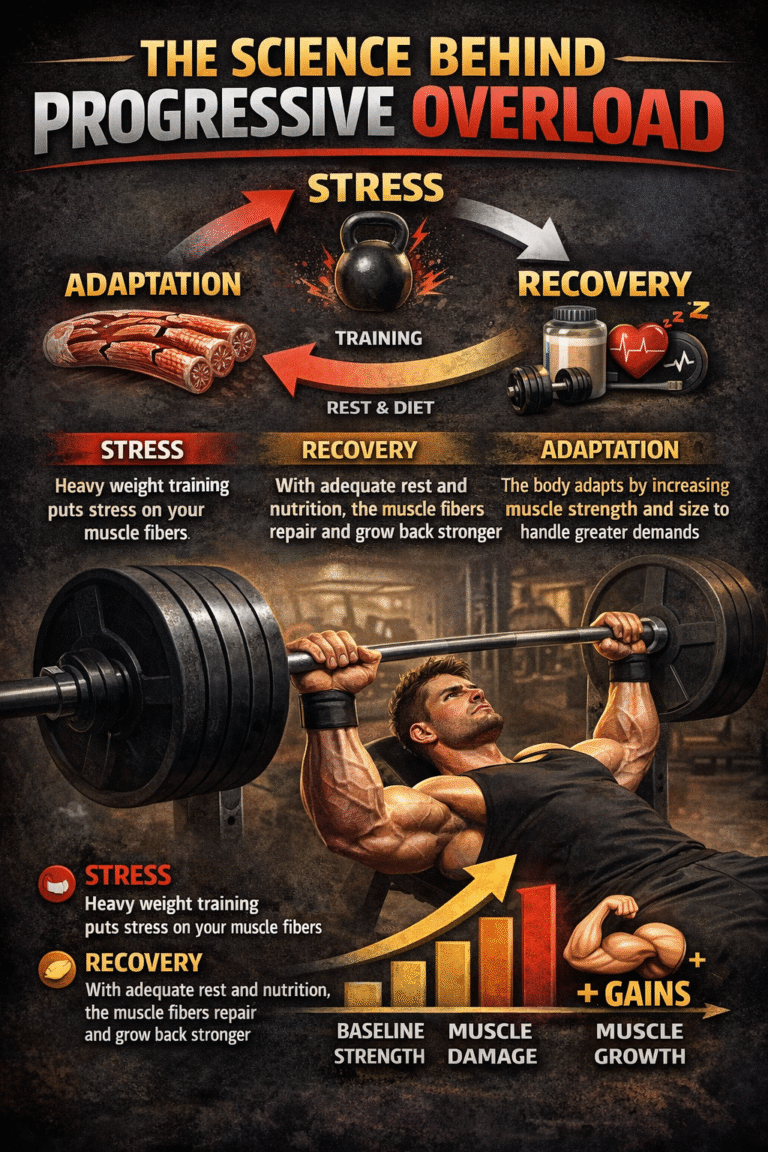
Progressive overload is rooted in the biological principle of adaptation, which states that the human body responds to repeated stress by becoming more efficient and resilient. when you perform resistent training, your muscles are exposed to mechanical tension,, which is the primary stimulus for strength annd hypertrophy. This tension creates microscopic damage within the muscles fibres partticularly in the contractile protein, actin and myosin.